The Science of Persuasion Is Not a Guessing Game
Meet the researcher who proved it.
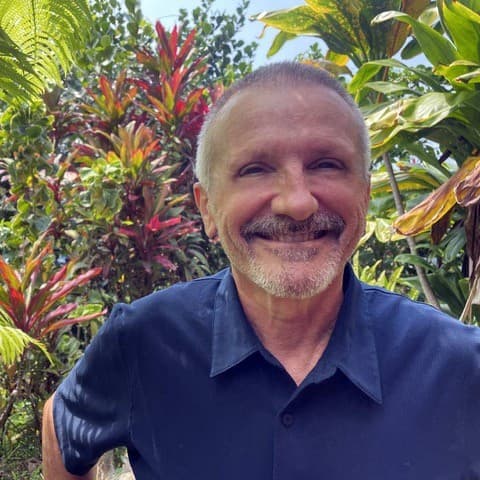
From Research Lab to Global Stage
Dr. Christophe Morin has spent over two decades at the frontier of neuroscience and business. His work answers a deceptively simple question: how does the brain actually decide?
That question led him to create NeuroMap® — a scientifically grounded framework for understanding and influencing the decision-making brain. Unlike conventional marketing theory, NeuroMap® is built on peer-reviewed neuroscience research and validated through real-world application.
Today, Dr. Morin is recognized as a pioneer in applying both neuroscience and artificial intelligence to the science of persuasion. He advises senior leaders, speaks at global events, and teaches in executive education programs at leading institutions.
His work spans the disciplines — drawing on neuroscience, behavioral economics, AI, and psychology — to give leaders a practical, evidence-based understanding of human decision-making.
In the truest sense of the word, Dr. Morin is a polymath: a scholar who has cultivated genuine mastery across ten fields over three decades. Neuroscience, marketing, psychology, behavioral economics, AI, consciousness studies, neurospirituality, wellness, personality science, and neuroleadership are not separate pursuits — they are threads in a single inquiry into what it means to think, feel, decide, and transform.
Understanding the Neuroscience Behind Donations
Research presentation — neuromarketing lab
A Polymath at the Intersection of Science and Human Potential
Rare in any era, Dr. Morin has built deep expertise across ten fields — not as a generalist, but as a synthesizer. Each discipline informs the others, producing insights no single field could generate alone.
Neuromarketing
2000s →Co-founded SalesBrain, the world's first neuromarketing agency. Created NeuroMap® — a brain-based framework for persuasion adopted by Fortune 500 companies globally.
Neuroscience
2000s →Applied cognitive and affective neuroscience to real-world persuasion, decision-making, and AI research. Faculty at Johns Hopkins Whiting School of Engineering.
Media Psychology
2010s →Earned a PhD in Media Psychology from Fielding Graduate University (2014). Researches how media shapes belief, emotion, and behavior at a neural level.
Behavioral Economics
2000s →Integrates behavioral economics with neuroscience to explain why people buy, give, follow — and how to ethically design for better decisions.
Consciousness Studies
2020s →Explores the neurological basis of awareness, identity, and inner experience — bridging hard science with the philosophy of mind in his 2025 book OPEN.
Neurospirituality
2020s →Pioneers the emerging field of neurospirituality — how spiritual practice reshapes brain structure, heals trauma, and expands consciousness. Featured in OPEN and OPEN UP.
Wellness & Mental Health
2015s →Authored The Serenity Code — a neuroscience-based guide to living without chronic stress, anxiety, and depression. Applied in clinical and corporate wellness contexts.
Personality Science
2020s →Brings rigorous brain science to the Enneagram system in OPEN UP — mapping personality types to neural profiles, trauma patterns, and pathways to transformation.
Artificial Intelligence
2020s →Researches how generative AI reshapes persuasion, influence, and human decision-making. Teaches AI Persuasion and Prompt Engineering at Johns Hopkins. Co-author of Neuromarketing AI.
Neuroleadership
2020s →Studies how leaders unlock potential and sustain performance in the age of AI — pairing the neuroscience of self-awareness, plasticity, resilience, and flow with personal AI systems. Foundation of the Johns Hopkins Leadership Potential and Leadership Performance certificates.
Academic & Professional Affiliations
The Johns Hopkins University
FacultyTeaches postgraduate courses in Neuromarketing, Consumer Neuroscience, AI Persuasion, and Prompt Engineering at the Whiting School of Engineering. Appointed Partnership Consultant in February 2025, further expanding his collaboration with the university on applied neuroscience and AI education.
Fielding Graduate University
Alumni & FacultyPhD in Media Psychology (2014) · Adjunct Faculty
Earned his doctorate in Media Psychology from Fielding in 2014. Now serves as adjunct faculty. His 2025 books OPEN and OPEN UP were featured by the university as landmark contributions to neurospirituality.
Career History
SalesBrain
CurrentNeuromarketingCo-Founder & CEO
Co-founded the world's first neuromarketing agency. Created and scaled NeuroMap®, the first neuroscience-based persuasion framework adopted by Fortune 500 companies globally.
Institute for Soul
CurrentNonprofitCo-Founder
Co-founded a nonprofit organization dedicated to the science and practice of neurospiritual healing, consciousness, and transformation.
The Johns Hopkins University
CurrentAcademiaAdjunct Faculty, Distinguished Lecturer & Partnership Consultant
Teaches postgraduate courses in Neuromarketing, Consumer Neuroscience, AI Persuasion, and Prompt Engineering at the Whiting School of Engineering. Appointed Partnership Consultant in February 2025.
Fielding Graduate University
CurrentAcademiaAdjunct Faculty
Earned a PhD in Media Psychology in 2014 and continues as adjunct faculty teaching neuromarketing, media neuroscience, and AI. Books OPEN and OPEN UP featured as landmark contributions to neurospirituality.
Neuromarketing Business & Science Association (NMSBA)
IndustryFounding Board Member
Served as a Founding Board Member of the NMSBA, helping establish the global standards and code of ethics for the neuromarketing industry — a landmark contribution recognized across the field.
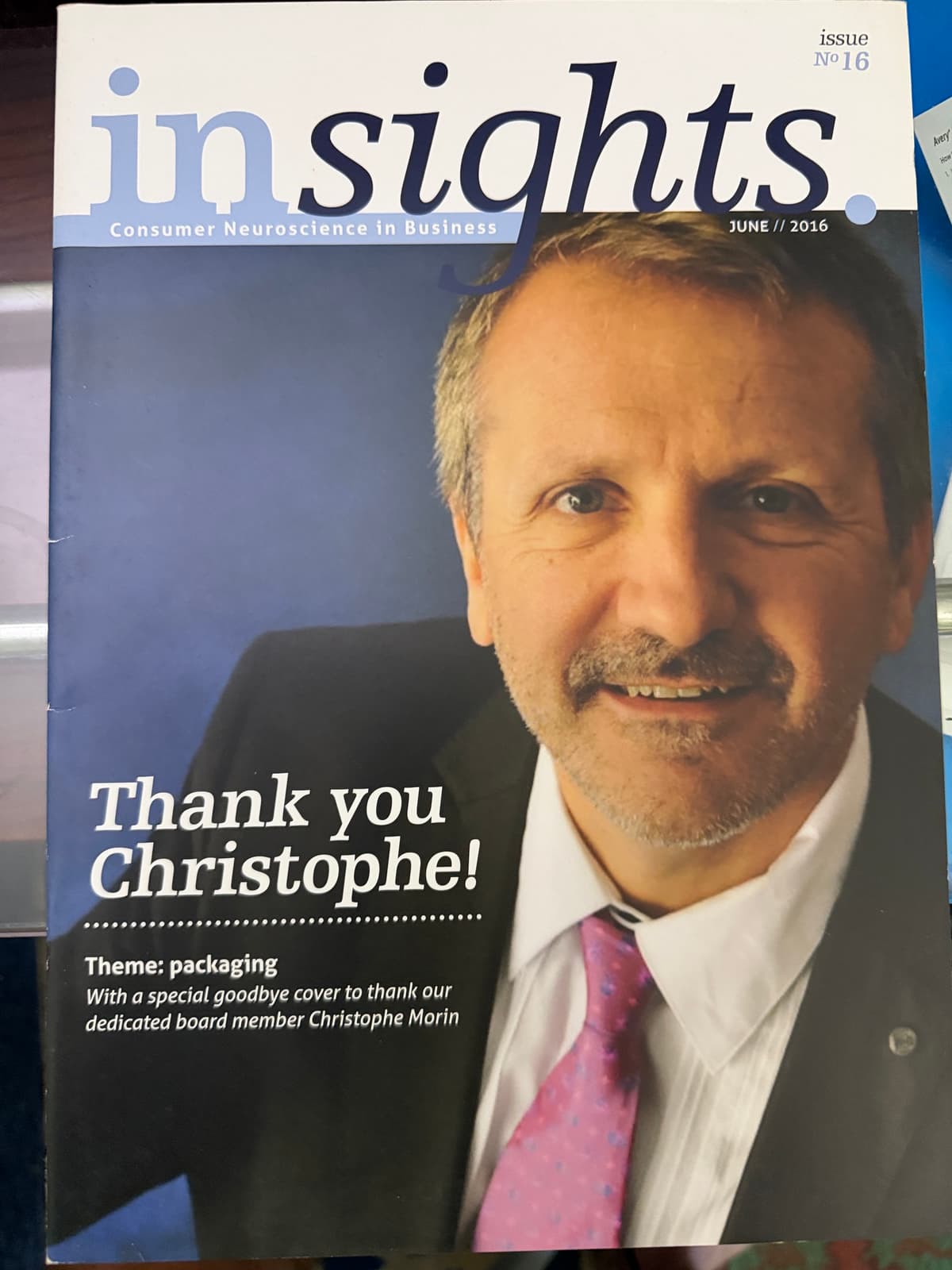
Recognition for contribution to the NMSBA Code of Ethics
StudentBridge
EdTechChief Scientist
Served as Chief Scientist, applying neuroscience and AI research to student engagement and higher education marketing technology.
rStar
MarketingChief Marketing Officer
Directed marketing strategy and brand positioning as CMO.
Grocery Outlet
RetailVP of Marketing
Led marketing operations and consumer strategy as Vice President of Marketing.
Doublet
ExecutiveCEO
Led the company as Chief Executive Officer.
Education
Fielding Graduate University
PhD in Media Psychology
Media Psychology
“Investigated the neurophysiological effect of public service announcements on the brains of teenagers and young adults.”
Fielding Graduate University
MA in Media Psychology
Media Psychology
Bowling Green State University
MBA
Marketing Research & Organizational Behavior
Audencia Business School
Bachelor of Business Administration
Marketing Research
A Career at the Frontier
NeuroMap® Framework Created
Developed the NeuroMap® methodology for applying neuroscience to persuasion and marketing — laying the scientific foundation for what would become a global standard in neuromarketing.
First Book Published
Published the first book introducing the science of neuromarketing to a business audience — one of the earliest works to translate brain research into practical persuasion strategy.
The Persuasion Code Released
Published the definitive guide to neuromarketing with the NeuroMap® framework at its core — co-authored with Patrick Renvoisé and published by Wiley.
Appointed Faculty — Johns Hopkins University
Appointed Adjunct Faculty and Distinguished Lecturer at the Johns Hopkins Whiting School of Engineering. Appointed Partnership Consultant in February 2025.
AI + Neuromarketing Integration
Pioneered the convergence of artificial intelligence and neuroscience-based persuasion — introducing NeuroPrompting and teaching AI Persuasion at Johns Hopkins. Published Neuromarketing AI: The New Science of Persuasion.
Interested in Working Together?
Let's discuss how neuroscience and AI can inform your strategy.